Summer People - Kate Waters
Images of the Exhibition
Description
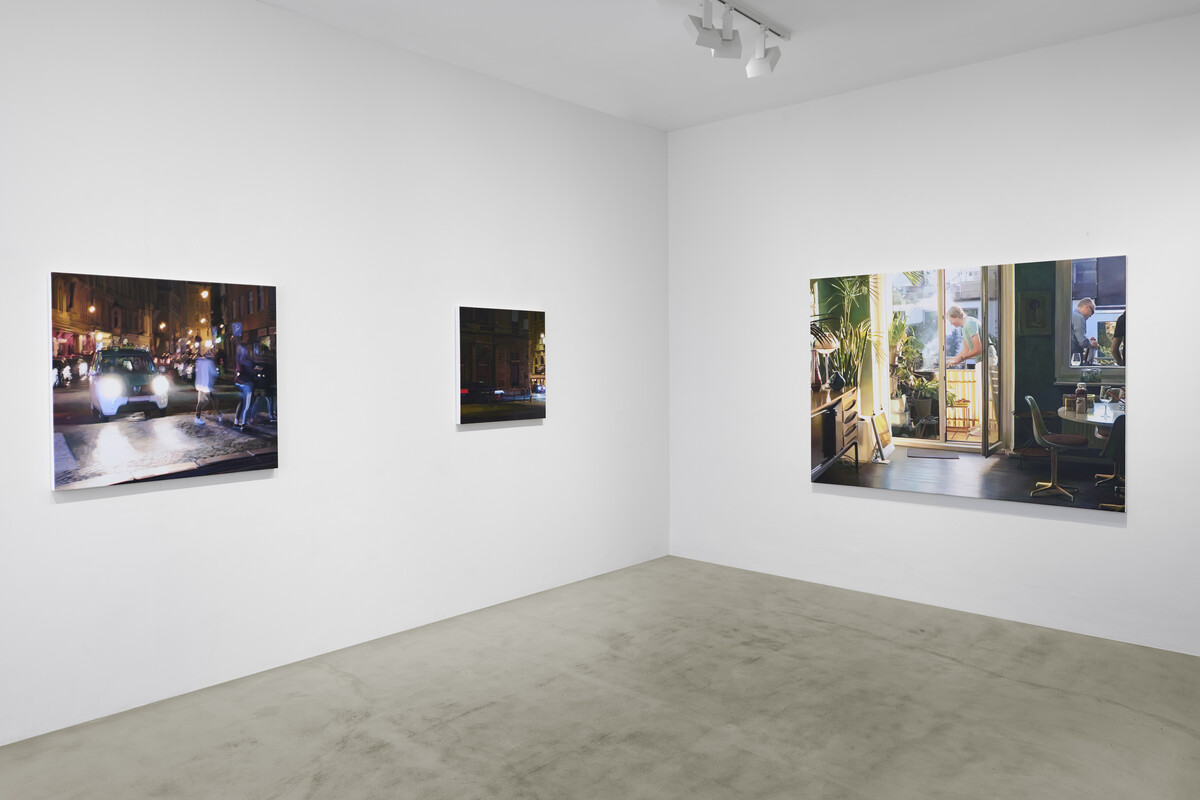
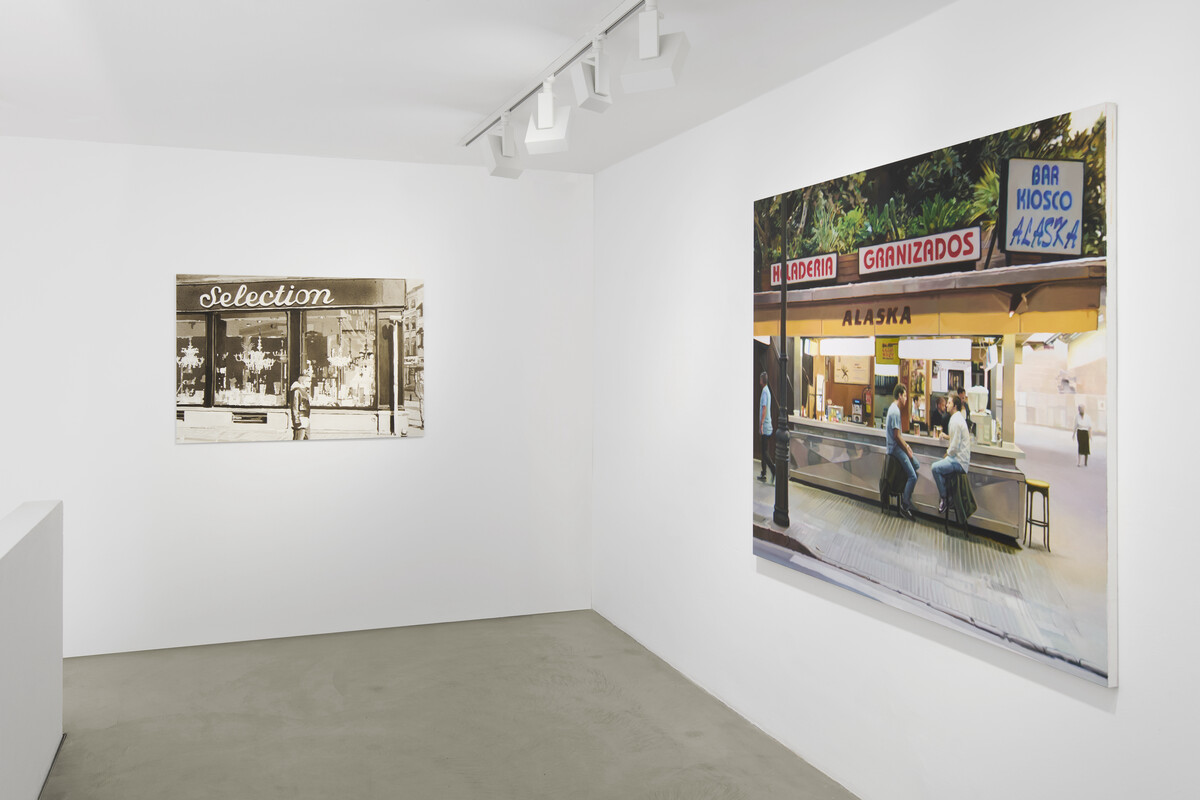
With the exhibition Summer People, Galerie Wolfgang Jahn in Munich presents, in keeping with the season, recent works by Kate Waters that focus on atmospherically charged lighting situations, fleeting scenes, and incidental moments in urban space, as well as summer leisure activities along promenades and waterfronts. The work of the Canadian-born artist, who now lives and works in Düsseldorf, is distinguished by a striking painterly realism. The same precision of observation and rendering also characterizes her graphic ink drawings. Despite their high degree of realism and the great care evident in their artistic execution, the works retain an autonomy that clearly sets them apart from the technical exactitude of photographic images. At the same time, Waters consciously draws upon photographic pictorial strategies. While the dazzling incidence of backlight lends the scenes a particular atmospheric quality, partial motion blurs point to the constant mutability of the situational and thus to a transience of the moment that is already inscribed in the appearance of the image itself. In her works, she captures these fleeting instants and preserves their particular expressive force as painterly impressions.
Often it is not the grand narratives and iconic images of world-historical events that shape and define our lives. Rather, it is the seemingly trivial moments: the small pleasures of everyday life, meeting and exchanging with relatives and friends, going swimming in summer, strolling along elegant shopping streets, visiting a café, or lingering in a park as a brief pause and moment of leisure. Behind their apparent everydayness, many of these scenes reveal, upon closer inspection, additional layers of meaning.
All these seemingly incidental scenes serve Waters as motifs for her paintings. As an attentive observer, she first records these ephemeral situations photographically, then condenses them compositionally and atmospherically through digital image editing and finally transfers them into the medium of painting. Through this renewed attention to the motif, through continued observation and careful scrutiny within the painterly process, she grants duration to moments that are, by their very nature, marked by transience. The works that emerge in this way move between photographic snapshot and painterly condensation.
At times, Kate Waters’s paintings appear almost like film stills from an arthouse production, translating the narrative of the everyday and the dramaturgy that arises from it into an atmospherically attuned direction of light. Carefully balanced pictorial framings lend the scenes a particular intensity and atmospheric density. At other times, the works reveal, in certain passages, the aesthetics of photographic snapshots, for instance when figures are cropped or passers-by appear within the image during a movement accompanied by blur.
As an observer, the artist tells of her impressions and of mostly anonymous encounters. In doing so, she speaks less of herself than of the lives of others through chance, yet deliberately selected, encounters and situations. Precisely in this selection of motifs, the artist’s own perspective becomes visible. For the decision as to which moments are captured, emphasized, and ultimately interpreted in painting reveals as much about her perception and interests as it does about the people depicted. From the crowd, recognizable individuals emerge, bound to their immediate reality and stepping, for a moment, out of the current of everyday life.
In her paintings, Kate Waters does not tell stories that have a beginning, a further development, or even an end. Rather, she captures moments that scarcely exceed the duration of the blink of an eye and whose contexts remain largely open. In doing so, she deliberately leaves the viewer in a state of uncertainty. This is also reflected in the painterly blur, which anonymizes the depicted figures to a certain extent and holds the scenes in suspension on both a visual and a thematic level. It is precisely this openness that creates space for one’s own observations, interpretations, and imaginative continuations. Upon closer inspection, details can be discerned that function as clues to particular states, allow for possible conclusions, and raise, on a meta-level, questions concerning interpersonal relationships and social constellations.
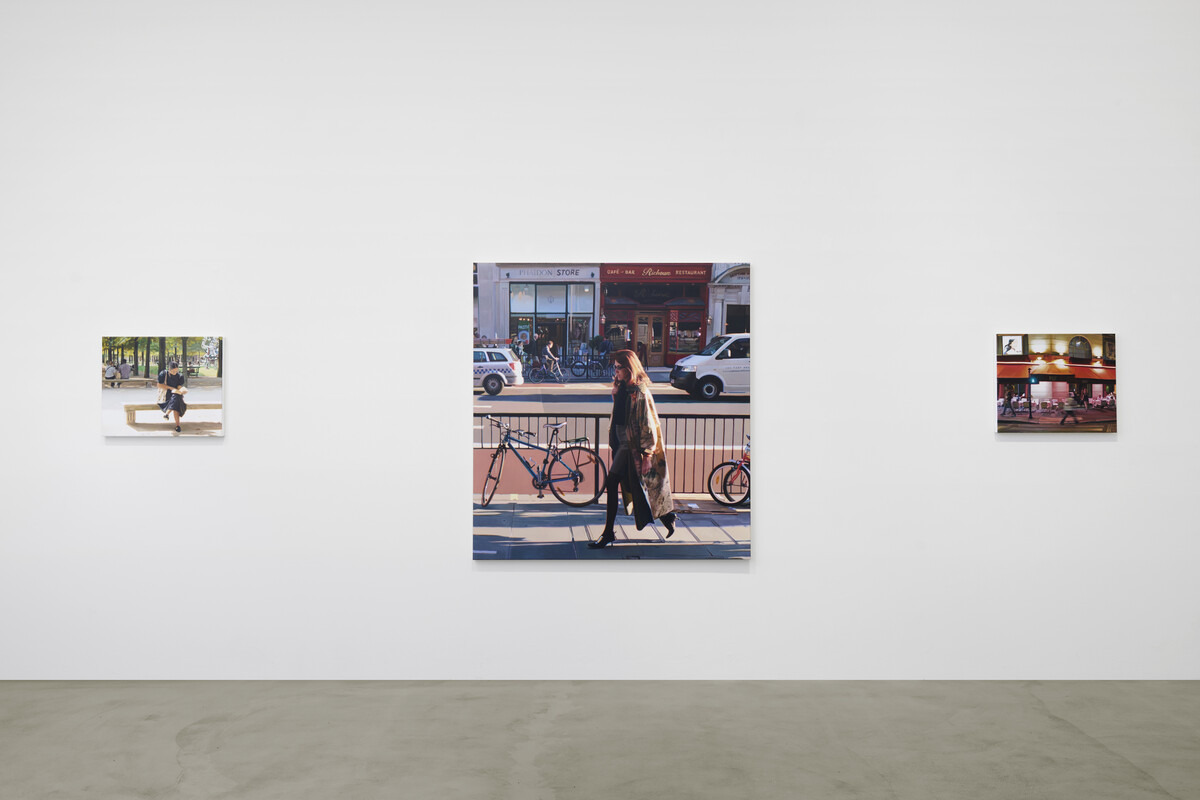
Thus, for instance, the fleeting presence of a waiter in a café moves to the center of attention. While the guests seem wholly absorbed in their own conversations and occupations, Waters directs attention to a figure who, in everyday life, often goes scarcely noticed. The incoming sunlight plays around his contours and lends him an almost auratic appearance. In the emphasis placed on the waiter, a remarkable shift in perspective takes place. It is not the consumers who stand at the center of the depiction, but rather the actor who makes the situation possible in the first place. The light lifts him out of the anonymity of his professional role and grants him a dignity and presence that often remain unnoticed in the ordinary course of social routines.
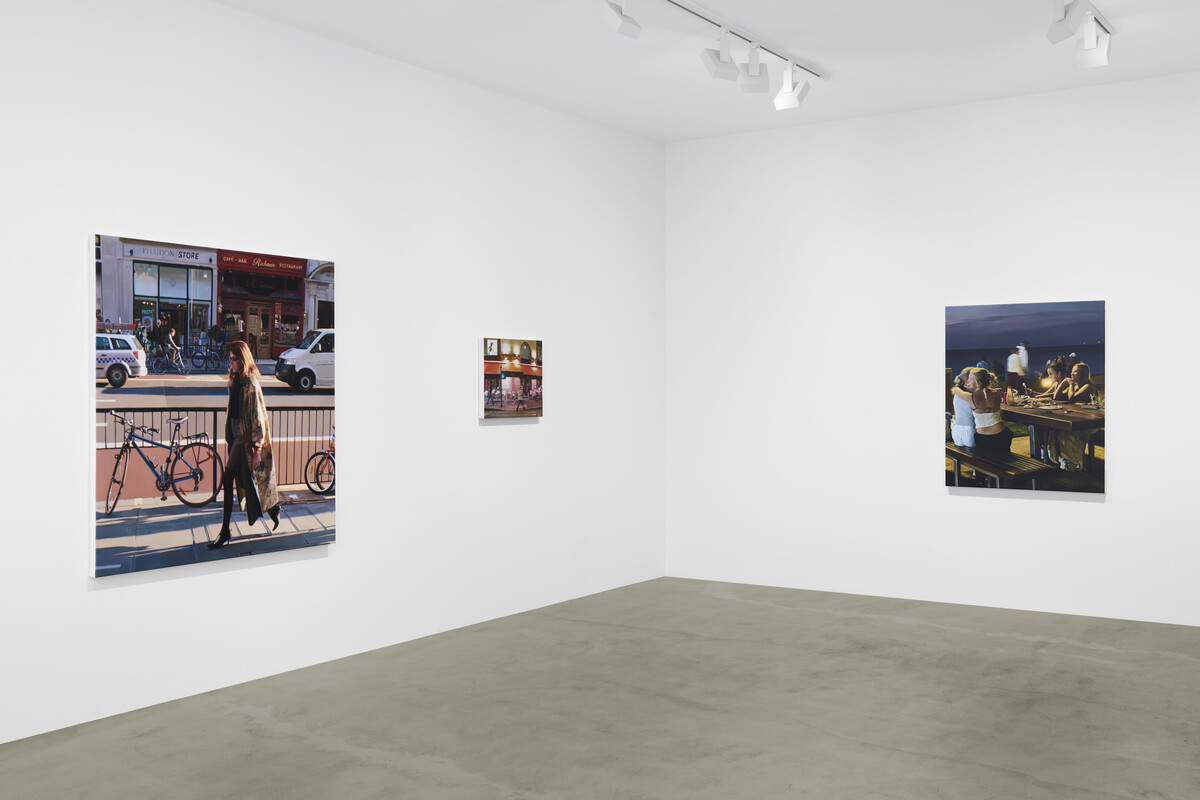
Then again, there is a scene in which what appear to be four female friends gather at a table on a waterfront promenade for an evening snack. Even though their faces suggest cheerfulness and a spontaneous embrace occurs between two of the women, it is noticeable that their attention is distributed in different directions. One of the figures looks at her smartphone, while the others each direct their attention elsewhere. What is especially striking is that their gazes do not meet. Despite their physical proximity, no shared visual point of reference emerges. Each of the women remains, for a moment, within her own perceptual space. The scene can therefore not be read solely as a depiction of friendly closeness. Rather, a peculiar tension emerges between community and individuality, between spatial connectedness and personal autonomy. It is precisely in this discrepancy between the social occasion and the actual behavior of those involved that a further layer of meaning opens up within the work.
The openness inherent in such scenes, however, is not limited to groups or social encounters. The works repeatedly encourage the viewer to think beyond what is immediately visible.
A similar dynamic can be observed in the painting The Cape of Good Hope. The woman walking through an urban scene initially appears as part of an everyday situation. Yet her sophisticated appearance and the effortless sovereignty of her bearing lend the figure a particular presence. She seems entirely absorbed in her own thoughts. Like a film still, the image transforms the narrative of the everyday, through its atmospheric handling of light and carefully composed framing, into a scene of peculiar significance. It is precisely this that sets a cinematic train of thought in motion for the viewer. What might the woman be thinking about? Where is she going? What events lie behind her, and what might still lie ahead? From the tension between the everyday situation and the peculiar aura of the figure emerges an inner cinema that expands the depicted moment far beyond what is immediately visible.
Kate Waters’s works direct the gaze toward the passing and the transient in a double sense. They show people who pass by, encounter one another, or cross a place only for a brief instant. At the same time, they hold on to moments that are themselves already in the process of passing. By removing these fleeting situations from the current of time and transferring them into painting, Waters grants them a duration that would otherwise be denied to the transient moment.
Dr. Veit Ziegelmaier

