Landscape Engineering II - Sven Drühl
Images of the Exhibition
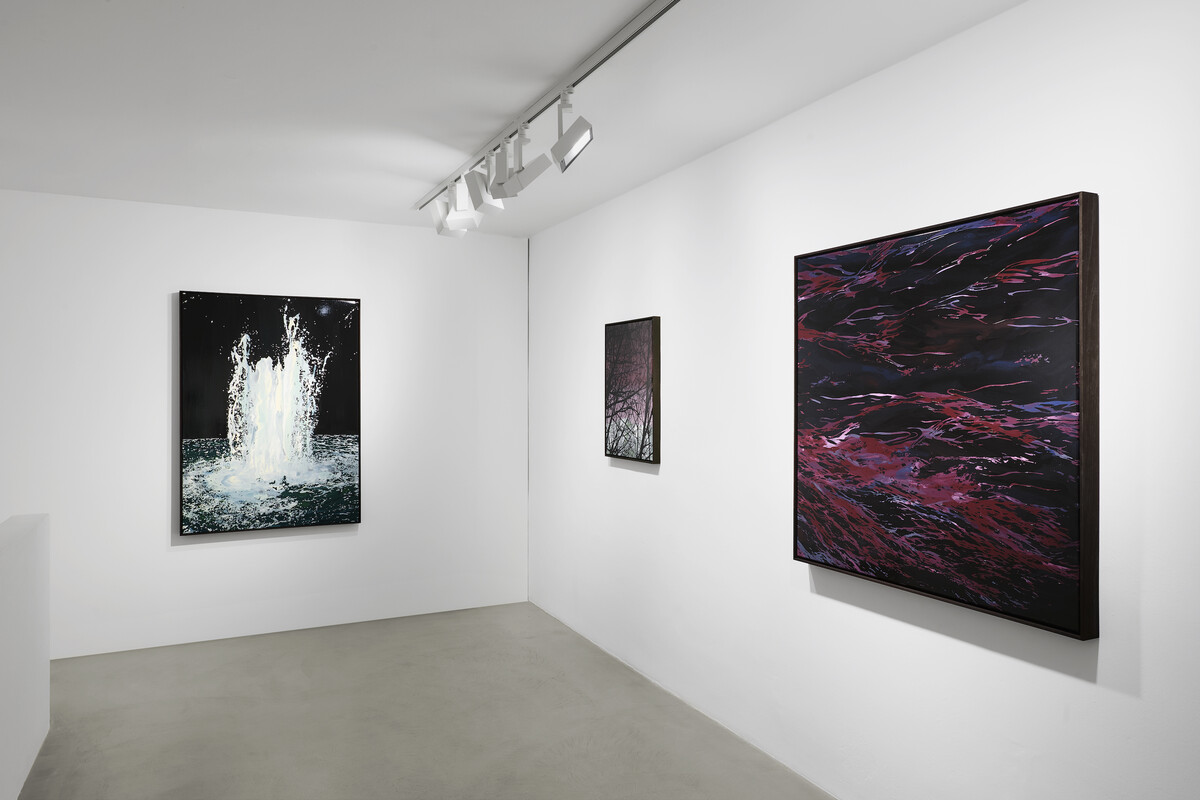
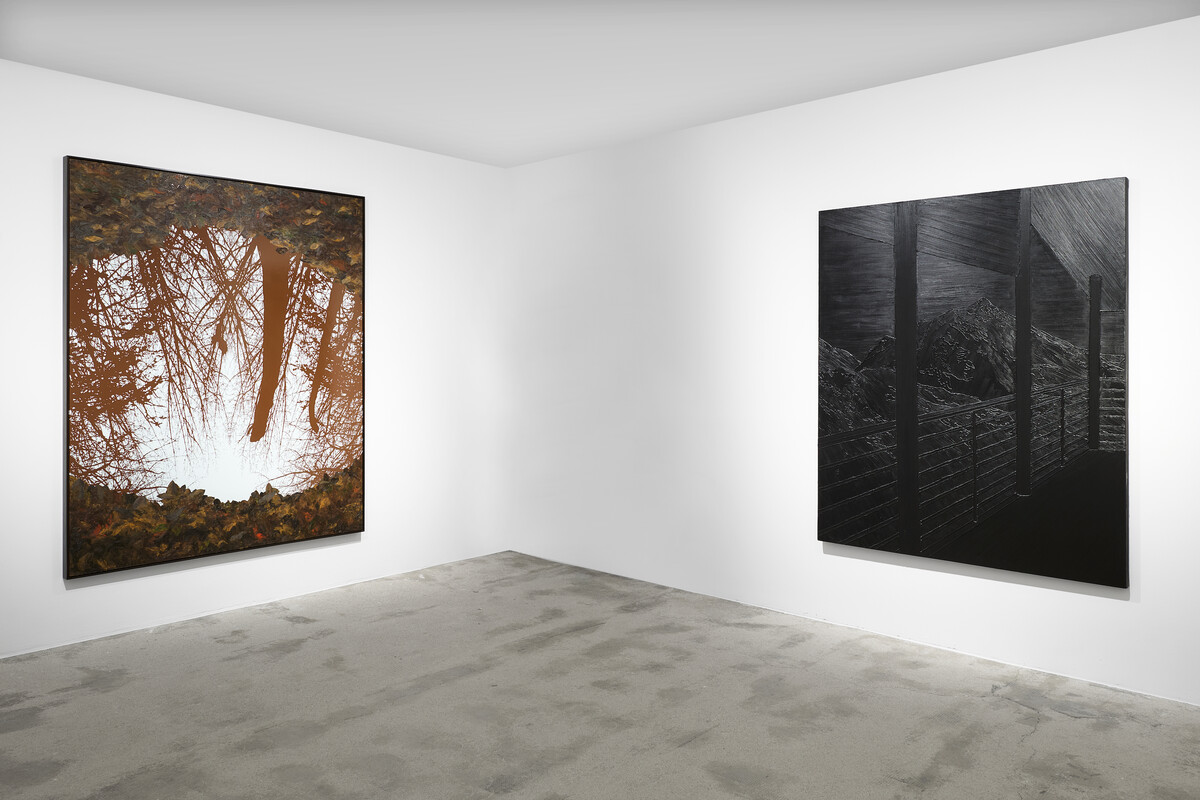
Description
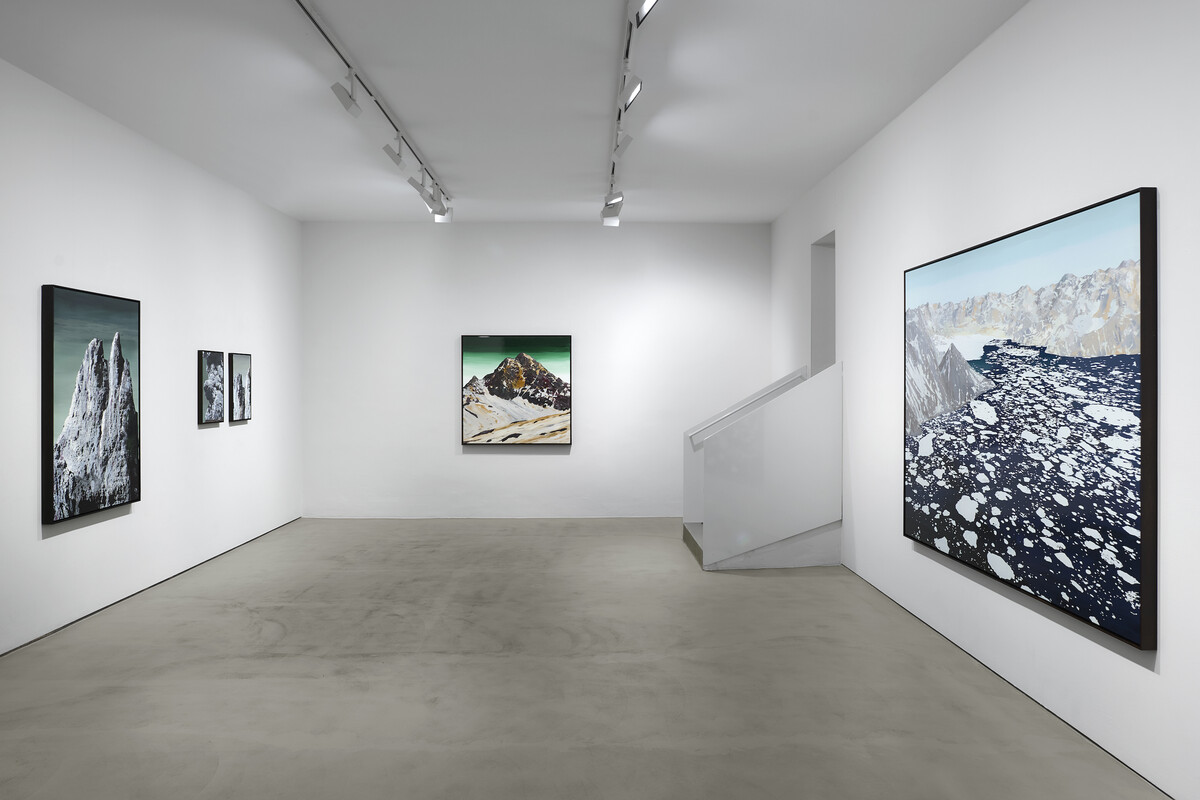
With Landscape Engineering II, Galerie Wolfgang Jahn in Munich presents recent works by Sven Drühl, oBering insight into his ongoing exploration of landscape as a motif and the possibilities of its painterly construction. In the gallery’s lower level, his latest paintings are shown alongside works dating from 2008 to 2015. This juxtaposition reveals the evolution of Drühl’s artistic practice while demonstrating how consistently certain fundamental principles have informed his work throughout.
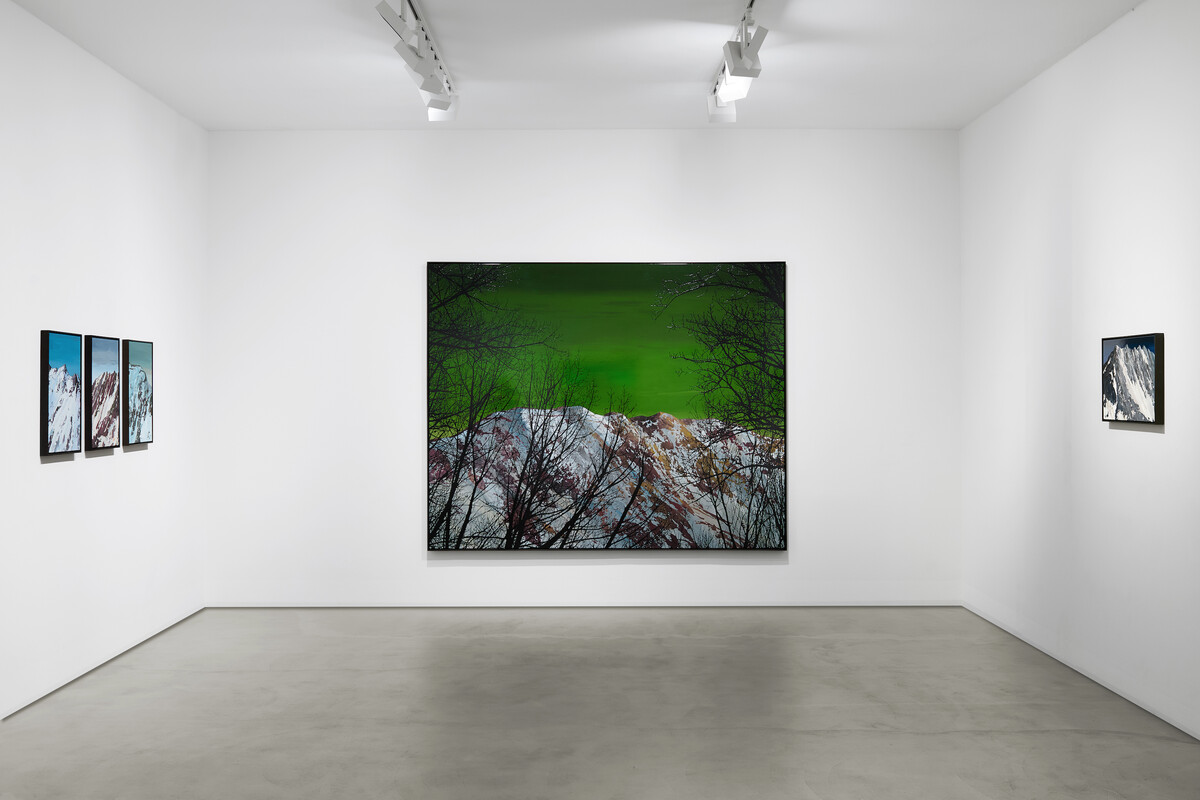
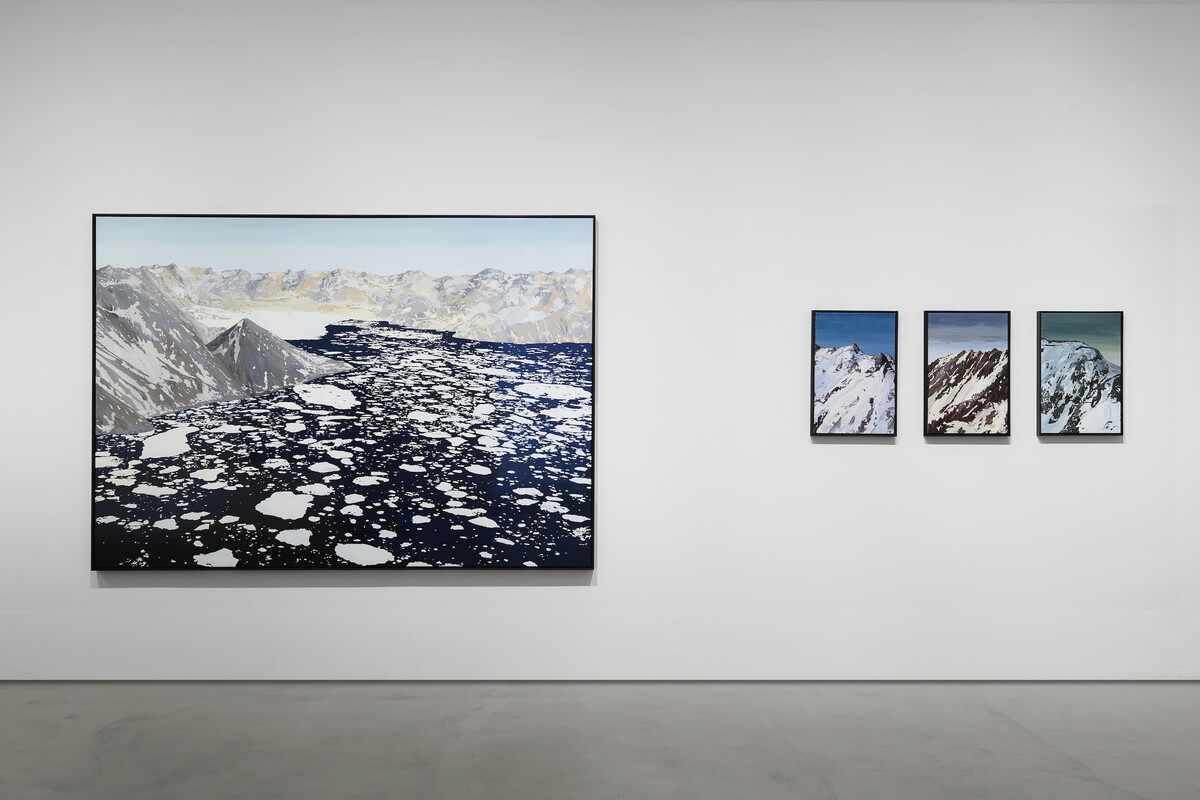
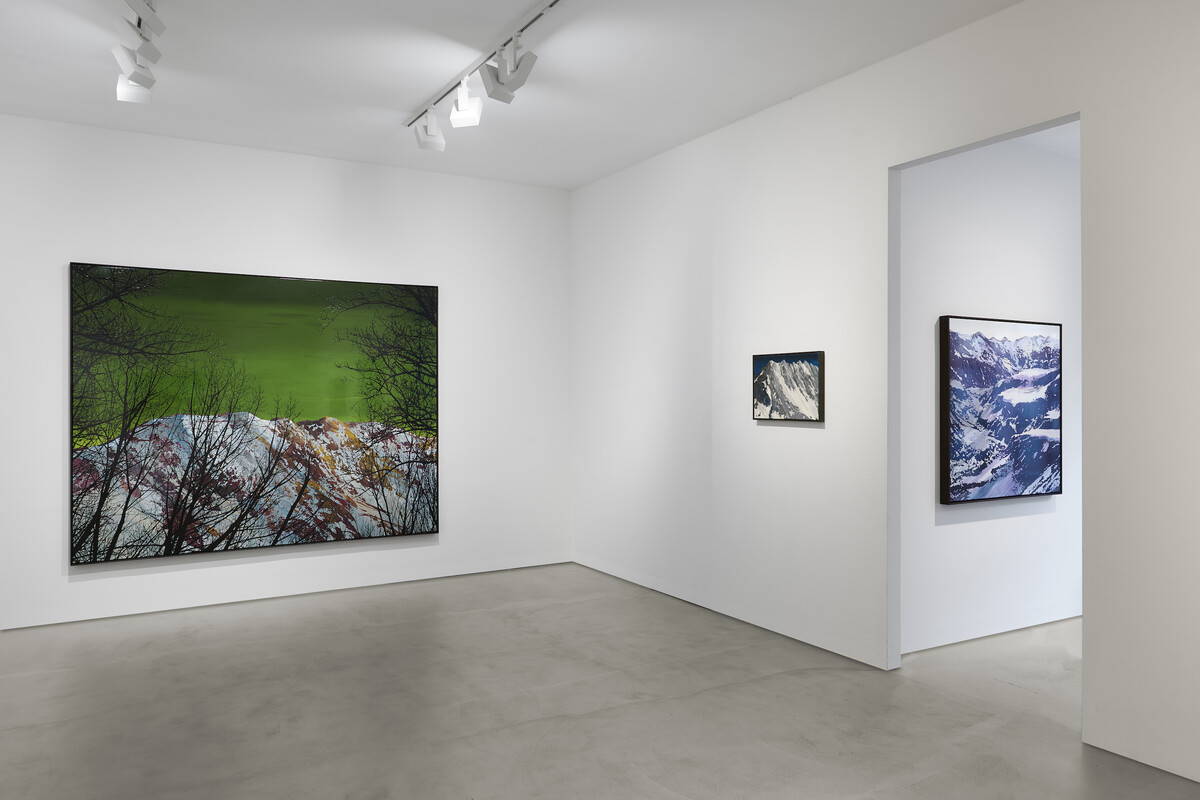
At first glance, Drühl’s landscapes appear immediate and representational. They depict majestic mountains, towering rock faces, glaciers, turbulent expanses of sea, and autumnal woodlands. Yet they retain a peculiar sense of distance. People and animals are entirely absent, and the landscapes themselves cannot be understood as representations of nature experienced firsthand. Drühl does not paint from direct observation of a landscape before him. Instead, his works emerge from images that already exist: historical paintings, photographs, Japanese shin-hanga woodblock prints, or digital landscapes drawn from the computer game industry. These sources serve as raw material, which Drühl selects, alters, combines, and reorganises into a new pictorial order. A single source may provide the starting point, but more often several references are brought together to form a new composition.
Drühl sometimes transforms his motifs to such an extent that their original context becomes almost unrecognisable. While the finished painting still points towards specific source material, it has simultaneously become an image in its own right. The titles of his works reveal, however, that the origins of these composite images remain relevant to his practice. Abbreviations such as C.D.F. or S.D.S.T.M., for instance, refer to the artists, photographers, or companies whose images or vector files serve as starting points. The recurring abbreviation C.G.T., for example, stands for Computer Graphic Texture. Other titles, such as Mirror or Stretch, refer to the respective processes through which the works are created. The aim is not to identify the original sources as precisely as possible, but to explore the process by which they are transformed into a new image. The question is not which landscape is depicted, but how deeply our conception of nature has already been shaped by existing images. Every representation of landscape is, in itself, a translation of the natural world. Nature is selected, composed, framed, and rendered in a particular visual language. Drühl makes this very process the subject of his painting. His works explore how images come into being, how they are transmitted and transformed, and, in doing so, engage with a collective visual memory that shapes our understanding of nature.
This approach runs throughout Drühl’s oeuvre and finds expression in a range of methods developed through successive series. In the early Undead paintings, the landscape motifs are rendered entirely in black. Their forms emerge from the monochrome surface like shallow reliefs, evoking, in art-historical terms, the work of artists such as Ad Reinhardt and Kazimir Malevich. What appears to be the end point of painting’s possibilities thus becomes the starting point for a renewed exploration of landscape. Depending on the light, the black surface begins to vibrate, developing a painterly life of its own. A different form of construction through reduction can be found in Drühl’s silicone paintings. Here, individual sections of the composition are separated by silicone ridges and subsequently filled with lacquer or oil paint. The flat, sharply delineated forms recall enamel work, stained glass, or comic-book illustrations, making the construction of the landscape from individual pictorial elements immediately visible.
In the lacquer paintings that followed, the surface is initially rendered smooth and flat, before painting gradually reasserts itself as a visible trace within the image. In his most recent works, Drühl combines digital imaging processes with traditional painting techniques. Using specialised software, he generates and manipulates landscapes, transfers the resulting visual structures onto plotted film, and then combines them with lacquer and oil paint. The films are precisely applied to the canvas and, following the addition of further painted elements, removed again, revealing selected areas that are then reworked and integrated into multiple layers. Digital image manipulation and widely diBering painterly techniques converge here with the physical labour of working on the canvas.
It is precisely in this process of making that a central tension in Drühl’s work becomes apparent: the apparent immediacy of the depicted landscape stands in contrast to the artificiality of its construction. Some paintings conceal their composite nature almost entirely, presenting themselves as coherent and convincing landscapes. In others, their constructed character comes clearly to the fore. Branches or graphic forms are superimposed upon the landscape like a second pictorial plane, making the construction of pictorial space directly perceptible. Traditional painterly devices, such as the creation of spatial depth, encounter flat, graphic elements. The landscape thus moves between illusion and the deliberate revelation of its own artifice.
In the most recent works, this relationship shifts once again in favour of painting itself. The colours appear more intense, more artificial, at times almost glaring. Lacquers flow into one another, dark layers of oil paint allow vivid hues to emerge, and areas of thickly applied paint lend the images a renewed material presence. In one red seascape, the horizon disappears entirely. The composition focuses exclusively on the surface of the water, bringing the landscape motif to the threshold of abstraction. What in earlier works appeared primarily as a conceptual investigation into the construction of images increasingly acquires a sensual and painterly quality of its own.
Drühl’s painting also raises questions of authorship and reality. These questions take on particular urgency in the present, when our perception of landscape is increasingly mediated by images we already know. Digital platforms circulate countless views of nature, images that repeat and reinforce one another. More often than we might realise, we seek out a place not so much for the immediate experience of its landscape as for the image of it that we already carry with us. Drühl’s works reveal that our gaze is never entirely unconditioned. In a sense, we arrive with our images of landscape already in place. When existing photographs, historical paintings, digital files, and virtual worlds from computer games become the starting points for a new painting, the question arises: where does an image begin, and where does its source end?
The artist offers no definitive answer. Instead, he makes the interplay between reference and invention, digital construction and the physical act of painting, the very subject of his work. His landscapes are constructions that nevertheless function convincingly as images of landscape. Sven Drühl is therefore less a painter of landscapes than a painter of landscape images. By recombining, transforming, and translating existing images into painting, he continually returns the question of the relationship between image and reality to the image itself.
Hannah Maria Biller
